
Technology
How robotic battery
disassembly works
Every EV maker builds packs differently — sonic welds, adhesives, proprietary fasteners — and designs change several times a year. Traditional automation can't keep up, and manual teardown costs about $240 in expert labor per pack before anyone touches a cell. Our answer: robots that learn disassembly the way apprentices do — by watching experts work.
The problem
Recyclers face a bad tradeoff. Manual disassembly recovers the most value, but it puts technicians next to thermal-runaway fires and lethal voltage. Whole-pack shredding is safer for people and scales — but it burns energy, consumes chemicals, and grinds reusable modules into lower-value feedstock. And no two packs come apart the same way: pack designs are non-standard and change several times a year, so fixed automation goes stale as fast as it's built.
Reverse-engineering a single pack takes two expert technicians about three hours. Batteries can hold lethal voltage and enter thermal runaway from one wrong cut.
The approach
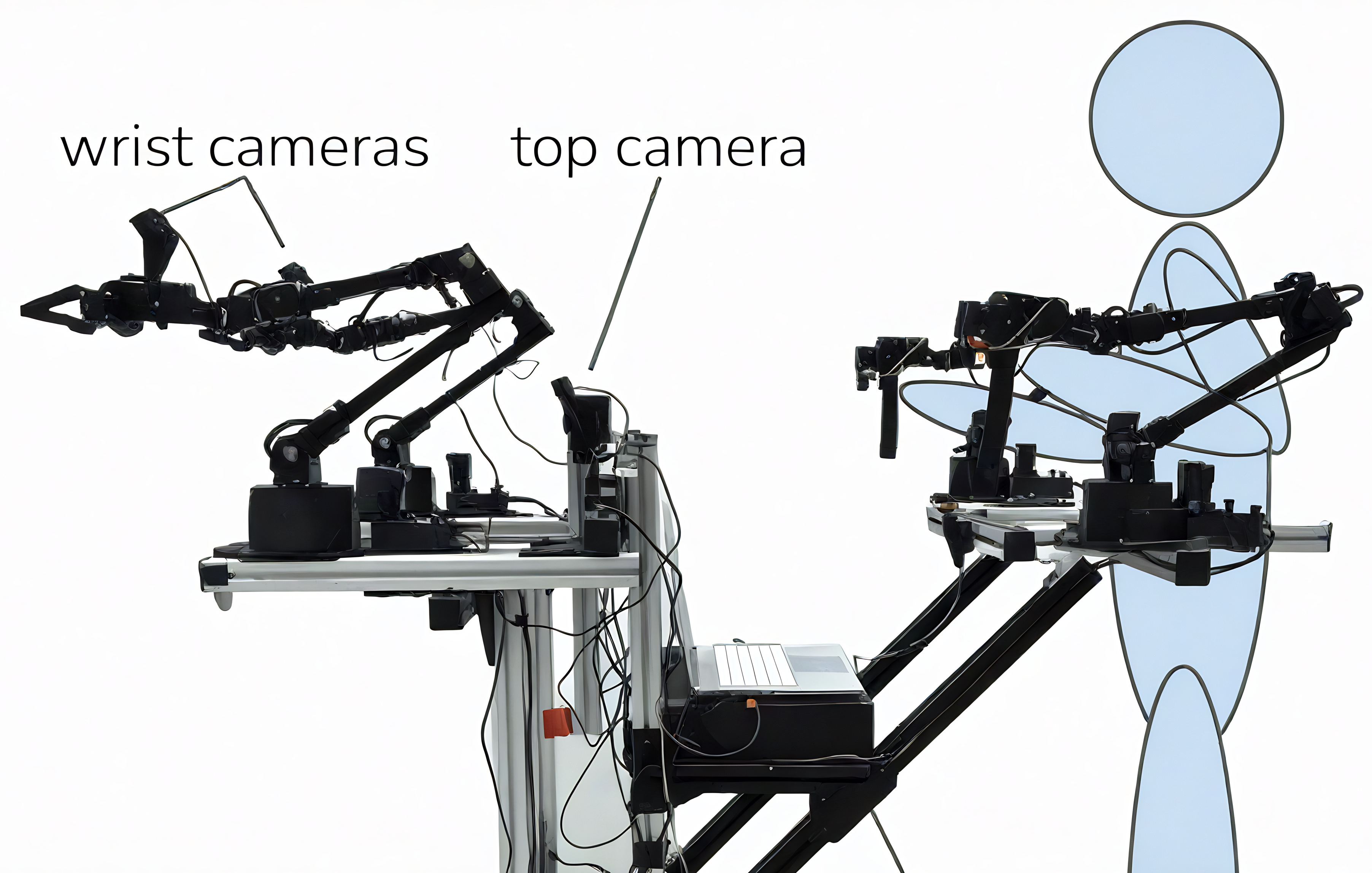
Instead of programming the robot for every pack, we teach it. Our systems learn from human demonstrations using transformer-based imitation learning — the Stanford ALOHA / Action Chunking with Transformers (ACT) lineage. On top of that, RCR adds a GraphRAG layer for robustness and explainability, and is researching Active Inference with Portland State University.
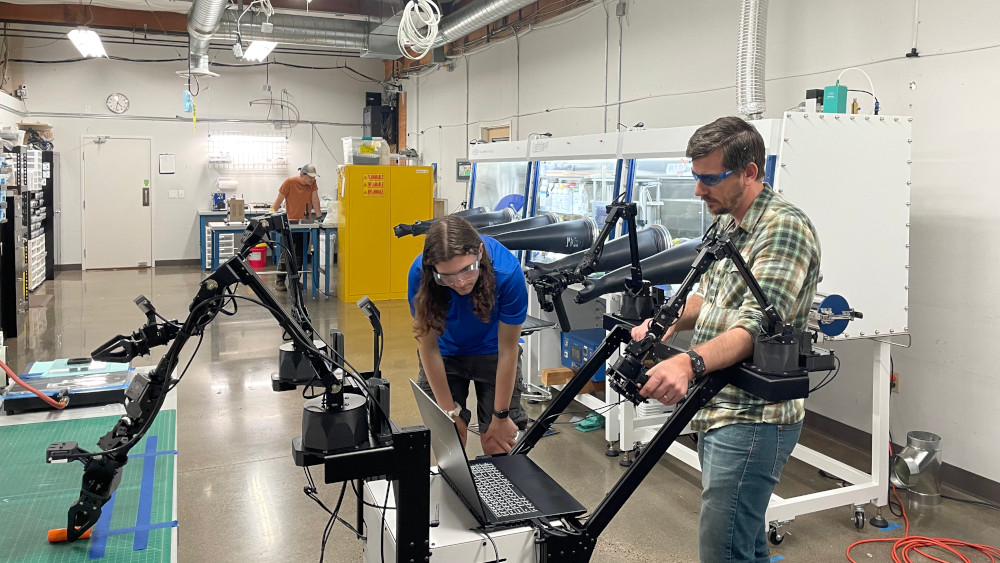
The robot runs in two modes. In teleoperation, an expert works the pack remotely — collecting training data and serving as the safety fallback. In autonomous mode, the robot works packs on its own to scale throughput. Every human intervention becomes a new training sample.
Five core skills we're training
- Locate and classify fasteners
- Identify and avoid shorting high-voltage rails
- Use disassembly tools as robot end effectors
- Delid the pack
- Pick & place scrap or reusable components
Safety by design
No person belongs next to a pack in thermal runaway. Disassembly happens by teleoperation inside an isolated, nitrogen-blanketed cell — workers are physically separated from the pack. The cell adds fume extraction and fire suppression, and cells destined for second life are sorted conservatively: we bias against false positives so a marginal cell is recycled, not reused.
What comes out
- Modules and cells for second life
-
Palletized modules sorted for stationary storage or remanufactured packs — an end-of-life pack often still holds about 80% of its capacity.
- Salvaged electronics
-
Reusable harnesses and BMS electronics recovered intact instead of shredded.
- Cleaner recycling feedstock
-
What is recycled arrives cleaner: simpler mechanical separation, fewer chemical inputs, lower energy, and higher critical-metal recovery.
Working on battery end-of-life? We want to talk.
Recyclers, OEMs, and research partners across the battery value chain — reach out.